What It Is, Why It Matters, and What Parents Should Know
Quick Summary: Australia’s Social Media Ban
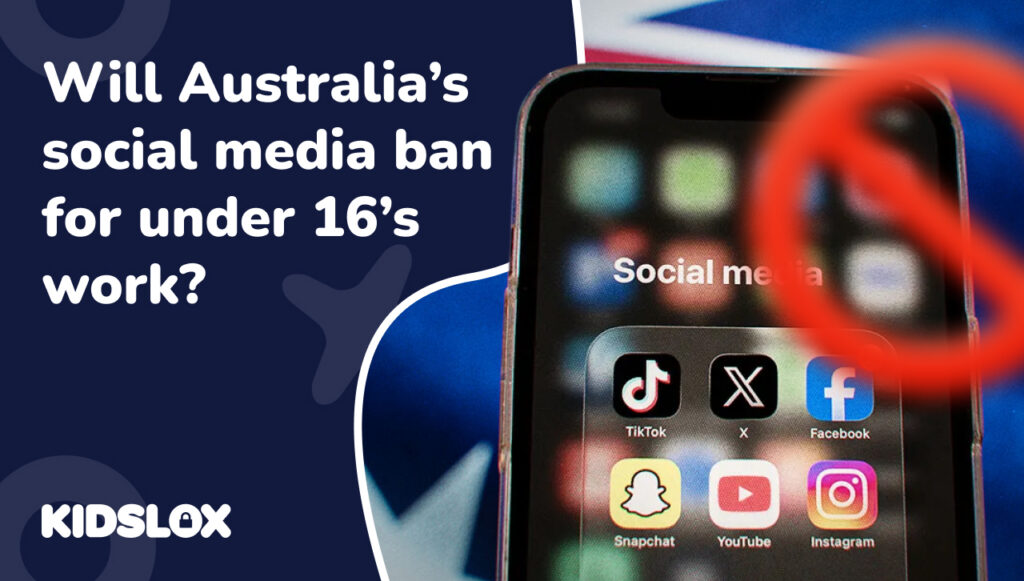
- Australia has introduced a world-first social media ban that prevents children under 16 from holding accounts on major platforms.
- The social media ban places responsibility on tech companies, not parents or children, with fines of up to AUD $49.5 million for non-compliance.
- Platforms affected include Instagram, TikTok, Snapchat, Reddit, Twitch, Facebook, X, YouTube, and others.
- Instagram has begun closing under-16 accounts in Australia, while Reddit and others are challenging the law in court.
- The ban was introduced in response to concerns about children’s mental health, online safety, bullying, and exposure to harmful content.
- Parents are encouraged to combine legal protections with digital education, open conversations, and parental control tools to keep kids safe online.
Australia has become the first country in the world to enact a sweeping ban on social media accounts for children under the age of 16. It’s a landmark move that is sending ripples through the technology industry, the world of online safety advocacy, and families everywhere.
This bold approach, officially known as the Online Safety Amendment (Social Media Minimum Age) Act 2024 came into force on 10 December 2025. From that date, major social media platforms were required to take “reasonable steps” to ensure that Australians under 16 cannot hold accounts on services like Instagram, TikTok, YouTube, Snapchat, Reddit, Twitch, Facebook, X (formerly Twitter), Threads, and more.
For many parents around the world, this raises important questions: What exactly does the ban do? Why did Australia enact it? Can it actually work? And what will it mean for kids’ online lives, both now and in the future?
What Is Australia’s Social Media Ban?
Australia’s new law prohibits the creation and maintenance of social media accounts by people under the age of 16. Unlike age-gating policies that ask for parental consent or rely on self-reported birthdates, the legislation requires companies to prove they are actively blocking under-16 users and complying or face significant fines of up to AUD 49.5 million for platforms that fail to prevent underage accounts.
Crucially:
- The ban applies to widely used social media and social media-like platforms where users interact with one another, post content, and build digital identities.
- Platforms must use age-assurance mechanisms, such as age verification technology or other “reasonable steps”, to stop users under 16 from creating or continuing to hold accounts.
- The law does not criminalise children or parents – it holds platforms accountable.
- Australia’s eSafety Commissioner, an independent regulator responsible for online safety, enforces the ban and works with tech companies to define compliance.
- The official list of banned services includes some of the biggest names in global tech: Meta’s Instagram and Facebook, Snapchat, TikTok, Reddit, Snapchat, Twitch, X, Threads, TikTok, YouTube, and others.
Why Australia Took The Step to Ban Social Media
According to the government, the ban was motivated by growing concerns about the mental health, emotional wellbeing, and safety of young people online.
A government-commissioned study found that 96% of Australian children aged 10–15 were already using social media, and that a large share had been exposed to harmful or disturbing content, including violence, self-harm, misogyny, and grooming behaviours.
Australian leaders have compared the ban to other public health measures, like seatbelt or alcohol laws, with the intention of delay rather than prohibition; that is, keeping social media out of reach during the most formative years of childhood to help protect development and wellbeing.
Prime Minister Anthony Albanese said the law aims to help families “take back power from tech giants” and provide clearer tools for offline safety conversations with young people.
Supporters argue the ban:
- Reduces exposure to relentless online pressures, comparisons, and anxiety-inducing content.
- Encourages healthier early adolescence by pushing social interaction away from screens and toward real-world development.
- Sets a global precedent for child-centred digital regulation.
Legal Challenges to the Social Media Ban
Reddit has filed a High Court challenge to strike down Australia’s law, arguing that it:
- Violates the implied constitutional freedom of political communication.
- Imposes intrusive age-verification processes that could endanger privacy.
- Should not apply to Reddit because it claims to be a collection of public forums rather than a traditional social media network.
The High Court is expected to provide guidance on these issues in 2026.
Kids and Teens Fight Back, Too
The legal challenges are not limited to tech companies.
Two Australian teenagers, both 15 years old, have launched their own court challenge, arguing that the ban limits their right to access online communities, share their views, and participate in civic life.
These youth litigants contend that social media is not just frivolous entertainment but a meaningful way to connect with peers, engage in political discussions, and express identity — and a blanket ban unfairly stifles their rights.
What Does The Ban Mean for Other Nations?
Australia’s policy has triggered international discussion about whether other countries should follow suit. Some policymakers in Europe, Asia, and North America have cited the ban as a case study on youth online safety, though few have committed to an outright ban modeled on Australia’s.
Critics from privacy advocacy groups, children’s rights organisations like UNICEF, and digital rights commentators have expressed concern that banning access is not sufficient to address the underlying problems of online harm. Rather than banning social networks, these groups argue for:
- Improved content moderation.
- Better safety design and stronger verification.
- Digital literacy education for children and parents.
Some experts worry that kids may simply migrate to less regulated, unmoderated spaces, potentially increasing exposure to risky content that isn’t governed by the same safety systems as mainstream platforms.
Is the Australian Social Media Ban Realistic? Can It Work?
One of the biggest questions among parents and policymakers alike is whether a ban like this can actually be enforced. Experts and industry analysts point to several real-world complications:
- Age Verification Technology Isn’t Perfect: platforms might use facial recognition, ID checks, or behavioral inference, but these systems can be imperfect and raise privacy concerns.
- VPNs and Workarounds: tech-savvy teens might use VPNs or falsified credentials to access social media despite age restrictions.
- Less Regulated Platforms Will Benefit: teenagers could migrate to gaming chats, private messaging services, or emerging apps not covered by the ban. Reports show that this is already happening.
- Safety Filters Might Be Lost: for services where logged-in users enjoy safety filters, kids without accounts might still see harmful content with fewer protections.
These practical limitations lead many observers to ask: Is the ban realistic? The short answer is that while the law may reduce some harms, enforcement will require ongoing refinement and technology alone won’t solve deeper issues of online culture and safety.
What This Means for Parents and Kids
For families navigating online life, Australia’s social media ban is both a warning and a guidepost.
Key Takeaways
- It underscores the seriousness of online safety concerns: platforms, parents, and policymakers are paying attention.
- Age restrictions alone aren’t sufficient: meaningful digital education and parental engagement are still essential.
- Open communication with kids matters more than ever: understanding why and how they want to use these platforms helps parents teach safer, smarter habits.
While the Australian experience may not translate perfectly to every country, the core message resonates with parents everywhere: digital safety isn’t accidental, it requires intention, oversight, and education.
Looking Ahead: What Happens Next
Australia’s social media ban is now in effect, but the story is far from over. Legal challenges will continue in the courts, and other nations are watching closely. How this law evolves, succeeds, or stumbles will shape global debates about children, technology, and rights in the digital age.
For parents today, the Australian example serves as both a caution and a call to action: to engage with kids about how they use technology, to support healthy digital habits, and to advocate for safer online environments everywhere.